
Properties in Costa Rica Blog

Monthly Archives: June 2026


Looking For a Gated Community in Costa Rica? 10 Things You Should Know About the New Infrastructure Projects

Looking For a Gated Community in Costa Rica? 10 Things You Should Know About the New Infrastructure Projects

June 18, 2026

Properties in Costa Rica

Costa Rica is officially ditching the “hidden gem” label for a high-tech, high-speed reality in 2026. If you’ve been waiting for a sign to finally snag that gated community property in Costa Rica, this is it. The “Pura Vida” lifestyle is getting a serious upgrade, and we aren’t just talking about better cocktails at the beach club.
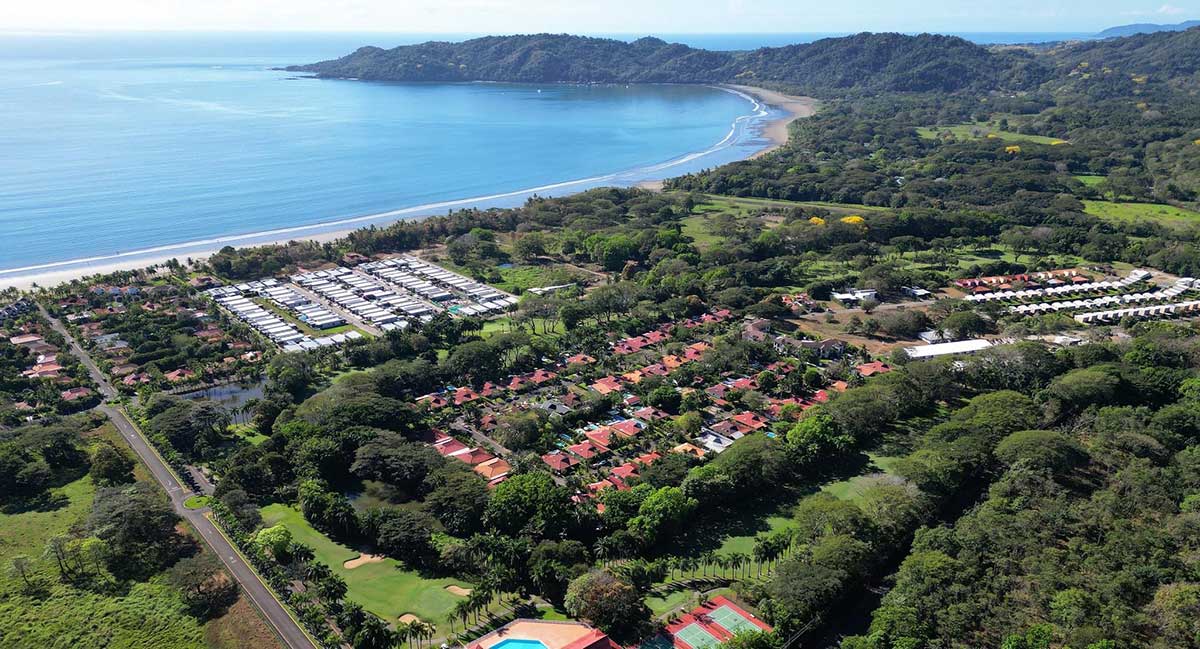
Billions of dollars are currently pouring into roads, rails, and fiber optics. For international investors, this means the map is changing. What used to be a “remote” jungle retreat is now a 45-minute commute on a smooth 4-lane highway with 18 Tbps internet speeds. Talk about role reversal! The days of “massage by pothole” are numbered, and property values are already feeling the heat.

Here are the 10 infrastructure game-changers you need to know before you sign that closing contract.

1. Route 21 (Guanacaste): No More Bumpy Arrivals!

Liberia’s main artery is finally getting the facelift it deserves. Route 21 connects the Daniel Oduber Quirós International Airport (LIR) to the gold coast: Tamarindo, Nosara, and the Nicoya Peninsula. The government has hit the gas on this expansion, turning it into a priority corridor for 2026.

Why does this matter? Because travel time matters. Reducing the slog from the airport to your front door by 30% makes weekend trips from Miami or Houston actually viable. Properties in these areas, like Casa Mango, are seeing a surge in interest because the “commute” is finally becoming a breeze.

Modern pool area of a home in a gated community in Nicoya Peninsula

2. Route 1: The Western Central Valley Power Move

The San José-San Ramón corridor is becoming the new suburban goldmine. While everyone has historically looked at Escazú, the expansion of Route 1 is opening up towns like Grecia and San Ramón as legitimate luxury living options for people working in the city.

With better bridges and more lanes, you can live in the cooler mountain climates of the Central Valley and be at your office in San José faster than you can say “segunda planta.” It’s super different from the traffic jams of five years ago.

3. Route 27 Expansion: Faster Beach Trips for the City Crowd

The Escazú-Atenas corridor is getting a major facelift. Route 27 is the lifeline between the capital and the Pacific. The 2023–2026 National Development Plan has this expansion slated to be 75% complete this year.

The coolest part? This widening project is specifically designed to eliminate the bottlenecks that used to turn a 1-hour trip to Jacó into a 3-hour odyssey. If you own a condo in a gated community near Orotina or Atenas, your backyard just got a whole lot more accessible.

4. The Electric Train: Moving the GAM into the Future

San José urbanites, your commute is about to get a lot more “European.” The long-awaited Electric Train project for the Greater Metropolitan Area (GAM) is the futuristic upgrade the city needed. It’s about connecting the dots between Cartago, San José, Heredia, and Alajuela without the carbon footprint.

For investors, this makes properties near transit hubs in Santa Ana and Rohrmoser incredibly valuable. Kids learn about sustainability in school, but here, the city is actually living it.

5. TAM-1 Submarine Cable: High-Speed Internet is Here

18 Terabits per second. Read that again. The TAM-1 submarine cable is the new digital backbone of the Americas, and it’s landing right here. This isn’t just “good” internet; it’s world-class connectivity.

Whether you’re a day trader or a CEO running a global empire from your porch, the TAM-1 system ensures zero lag. In 2026, “working from the beach” isn’t a pipe dream; it’s a technical reality. Digital nomads are flocking to these high-speed zones, driving rental demand through the roof.

Modern living room with high-speed internet capability in a luxury gated community

6. Route 32: The Caribbean Side Level-Up

Say goodbye to the “Death Highway” and hello to 4 lanes of progress. The massive project connecting the Central Valley to Limón is finally creating a safe, fast route to the Caribbean coast.

The Caribbean has always had a different vibe, but now it has the infrastructure to match. This expansion is opening up Puerto Viejo and Cahuita to investors who were previously spooked by the tough drive. It’s a total game-changer for the region’s logistics and tourism.

7. 5G in the Jungle: Connectivity is King

Liberty and Ericsson are crushing the ecological knowledge gap. They’ve secured US$100 million in financing to roll out 5G across the country by 2026. This means that even in remote gated communities, you’re getting signal that’s often better than what you’d find in mid-size US cities.

Don’t worry, the monkeys still have their trees, but now you can stream 4K video from your hammock. Connectivity in the jungle is officially better than ever, making remote luxury living a no-compromise lifestyle.

Outdoor terrace of a modern home showing 5G connectivity potential in a lush setting

8. Airport Expansions: SJO and LIR are Growing Up

More gates, fewer lines, and a lot more smiles. Both Juan Santamaría (SJO) and Daniel Oduber (LIR) have undergone massive expansions to handle the influx of international flights. We’re seeing more direct routes from Europe and Canada than ever before.

Travelers don’t just want to visit; they want to stay. The improved efficiency at these hubs means your international guests (or your renters!) start their vacation with a breeze instead of a bottleneck.

9. Energy Stability: Modern Grids for Smart Homes

Costa Rica’s 99% renewable energy grid is getting even smarter. The 2026 energy push includes smart grid technology specifically designed to support high-end, energy-intensive smart homes.

Think automated climate control, high-speed EV chargers in every garage, and integrated security systems that never go dark. Energy stability is a huge draw for high-net-worth investors who want their ocean-view smart home to run flawlessly while they’re away.

10. Property Value Boost: Why You Should Act Now

Property values rose 7% in 2025, and 2026 is looking even stronger. Statistics don’t lie. When infrastructure goes in, property values go up. It’s real estate 101.

Investors who bought in Guanacaste before the Route 21 expansion are already seeing significant gains. The same is happening along the Route 27 and Route 32 corridors. Buying in a connected zone now isn’t just about a nice house; it’s a strategic move to capture the appreciation that comes with a modernized nation.

Why Partner with Properties in Costa Rica?

Navigating these changes requires more than just a GPS; you need local boots on the ground. At Properties in Costa Rica, we’re a full-service real estate company that speaks your language, literally. Our multilingual staff (English, Spanish, French) ensures nothing is lost in translation.

Ready to see how these infrastructure projects can benefit your portfolio? Contact our expert team today and let’s find your piece of the new Costa Rica!

Comments Off on Looking For a Gated Community in Costa Rica? 10 Things You Should Know About the New Infrastructure Projects


The ‘Caja’ and the Law: A Stress-Free Guide to Hiring in Costa Rica

The ‘Caja’ and the Law: A Stress-Free Guide to Hiring in Costa Rica

June 17, 2026

Properties in Costa Rica

Hiring help in Costa Rica is super different than back home. You’ve probably heard horror stories about labor lawsuits or unexpected “hidden” costs, but honestly? It’s only scary if you don’t know the rules. Whether you’re buying a luxury beachfront home and need a full-time caretaker, or you’re launching a commercial project, understanding the “Caja” is non-negotiable.

Don’t let the legal jargon freak you out. At Properties in Costa Rica, we’ve helped hundreds of investors navigate the transition to life in the tropics, and that includes the nitty-gritty of payroll. If you want to keep your investment safe and your staff happy, you need to master the basics of the CCSS and the Labor Code.

What exactly is the ‘Caja’ anyway?

The “Caja” isn’t just a tax: it’s the backbone of the Costa Rican social safety net. Officially known as the Caja Costarricense de Seguro Social (CCSS), this institution handles two massive things: your employees’ health insurance and their pension.

When you pay into the Caja, you’re ensuring your staff can walk into a public clinic for anything from a flu shot to a major surgery without paying a dime out of pocket. It also builds their retirement fund (IVM). For you, as an employer, it’s your legal shield. If you don’t register your workers, you’re personally liable for every single medical bill they incur if they get sick or injured. Talk about a financial nightmare!

The Magic Numbers: 2026 Rates You Need to Know

Budgeting 101: Your agreed-upon salary is just the starting point. In 2026, the rates are crystal clear, but they add a significant “load” to your monthly expenses. You can’t just hand over a wad of cash and call it a day.

  • Employer Contribution: You’ll pay roughly 26.83% on top of the gross salary.
  • Employee Contribution: Your worker contributes about 10.83%, which you withhold from their paycheck and send to the CCSS.

Let’s look at a real scenario. If you hire a property manager for $1,000 a month (gross), your actual cost as an employer is $1,268.30. Your employee will take home $891.70 after their 10.83% is deducted. It’s a bit of a shocker at first, but this is how the system stays funded and keeps everyone covered.

The 15th of the Month: Your Most Important Deadline

Mark your calendar in red because the CCSS doesn’t do “fashionably late.” Every single month, you have until the 15th to submit your payroll report and pay the contributions for the previous month.

Missing this deadline isn’t just a minor oops: it can trigger fines and, more importantly, it makes you “moroso” (delinquent). Being on the delinquent list can prevent you from doing other legal tasks in the country, like renewing permits or even closing a real estate deal. Pro tip: Get an accountant or use a payroll service to automate this. It’ll save you a ton of stress!

INS: The “Other” Mandatory Insurance

Don’t confuse the Caja with INS. While the Caja handles health and sickness, the INS (Instituto Nacional de Seguros) covers labor risks (Workers’ Comp). This is a separate policy you must have for every employee, even if they only work for you a few hours a week.

If your gardener slips on a wet leaf or your housekeeper trips on the stairs, INS covers the disability pay and the specific recovery costs. Without it, the labor courts will come down hard on you. It’s usually an annual policy, and the cost varies based on the “risk” of the job. A construction worker costs more to insure than an office assistant: which makes total sense, right?

The $10,000 Question: Employee or Contractor?

The coolest part about Costa Rican law? It prioritizes reality over what’s written on paper. You might think, “I’ll just hire them as an independent contractor to save on the Caja.” Watch out! The Ministry of Labor uses the “Principle of Primacy of Reality.”

If the person has a set schedule, follows your direct orders (subordination), and uses your tools, they are an employee. It doesn’t matter if you have a signed contract saying they are a “consultant.” If they look like an employee and act like an employee, the law says they are one. If you misclassify them, you could be forced to pay years of back-dated CCSS contributions and benefits. Not exactly the “Pura Vida” vibe you’re looking for!

Navigating the Minimum Wage Tiers (CNS)

The government literally sets the “floor” for every job imaginable. The Consejo Nacional de Salarios (CNS) publishes a list of minimum wages categorized by skill level.

  • Unskilled Workers: This usually covers general cleaners or basic farm help.
  • Semi-Skilled & Skilled: Think specialized maintenance or drivers.
  • Specialized (Technicians/Graduates): If your hire has a university degree or technical certification, the minimum wage jumps significantly.

You can always pay more than the minimum (and for top-tier talent in San Jose or Escazu, you definitely will), but you can never pay less. For 2026, even the most basic roles have seen an adjustment to keep up with the cost of living.

The “Aguinaldo” Shocker: Why your total load is 40-50% extra

The biggest surprise for new investors is the total cost of labor. When you add up the Caja (26.83%), the INS insurance, the mandatory two weeks of vacation, and the famous Aguinaldo, your total cost is actually about 40-50% over the base salary.

What’s the Aguinaldo? It’s the mandatory 13th-month bonus paid in December. You take the total earnings from December 1st of last year to November 30th of this year, divide by 12, and that’s the bonus. Even if someone only worked for you for two months, they get a pro-rated Aguinaldo. It’s a non-negotiable Christmas tradition here!

Ready to Build Your Dream Team?

Hiring in Costa Rica doesn’t have to be a headache. As long as you respect the CCSS, pay your INS on time, and stick to the CNS minimums, you’ll have a loyal, happy team helping you manage your piece of paradise.

If you’re still in the “searching” phase and want to find the perfect property that needs a little (or a lot) of TLC, check out our latest listings in the Central Valley or our beachfront condos. We don’t just sell houses; we help you build a life here.

Still have questions? Contact us today and we can point you toward the best legal and accounting pros in the country to make sure your hiring process is 100% compliant!

Comments Off on The ‘Caja’ and the Law: A Stress-Free Guide to Hiring in Costa Rica


Google+ Facebook Linkedin Youtube Twitter Blog Instagram